A Unique Mobile Tradition
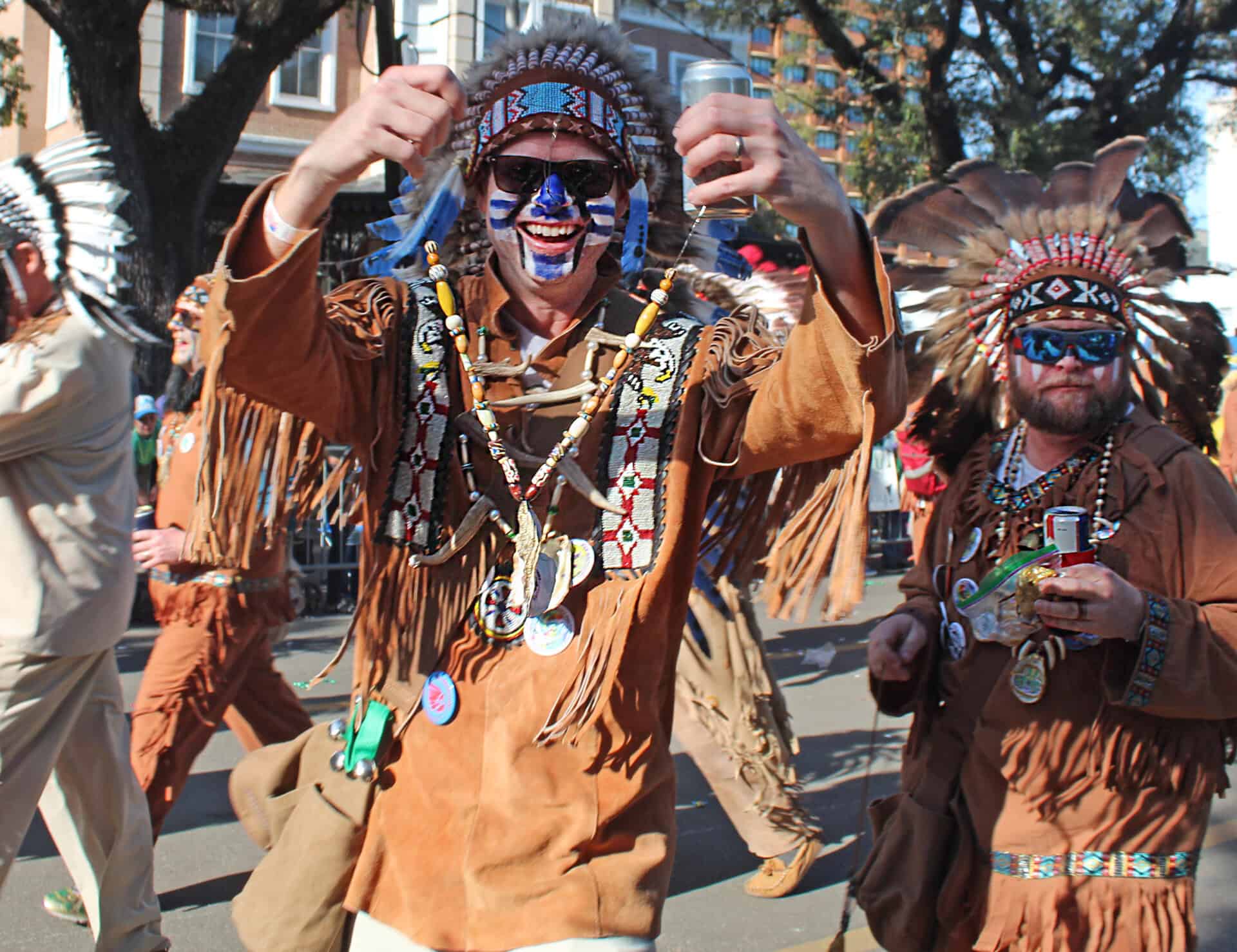
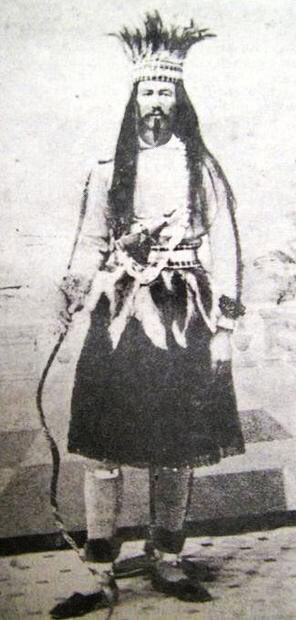
Since 1967, the Sunday before Fat Tuesday has been celebrated as Joe Cain Day in Mobile, Alabama, in honor of the man credited with reviving Mardi Gras in 1868. Local historian Julian Lee “Judy” Rayford started the tradition, even reintering Joe Cain and his wife in downtown Mobile. Dressed as Cain’s character, Chief Slacabamarinico, Rayford led the first parade, later passing the role to others, including Wayne Dean Sr., who has portrayed Chief Slac for over 30 years.
Originally known as The People’s Parade, the procession welcomed anyone with a homemade float. Although it has since become more regulated, it remains a grassroots event that is full of creativity, community, and fun.
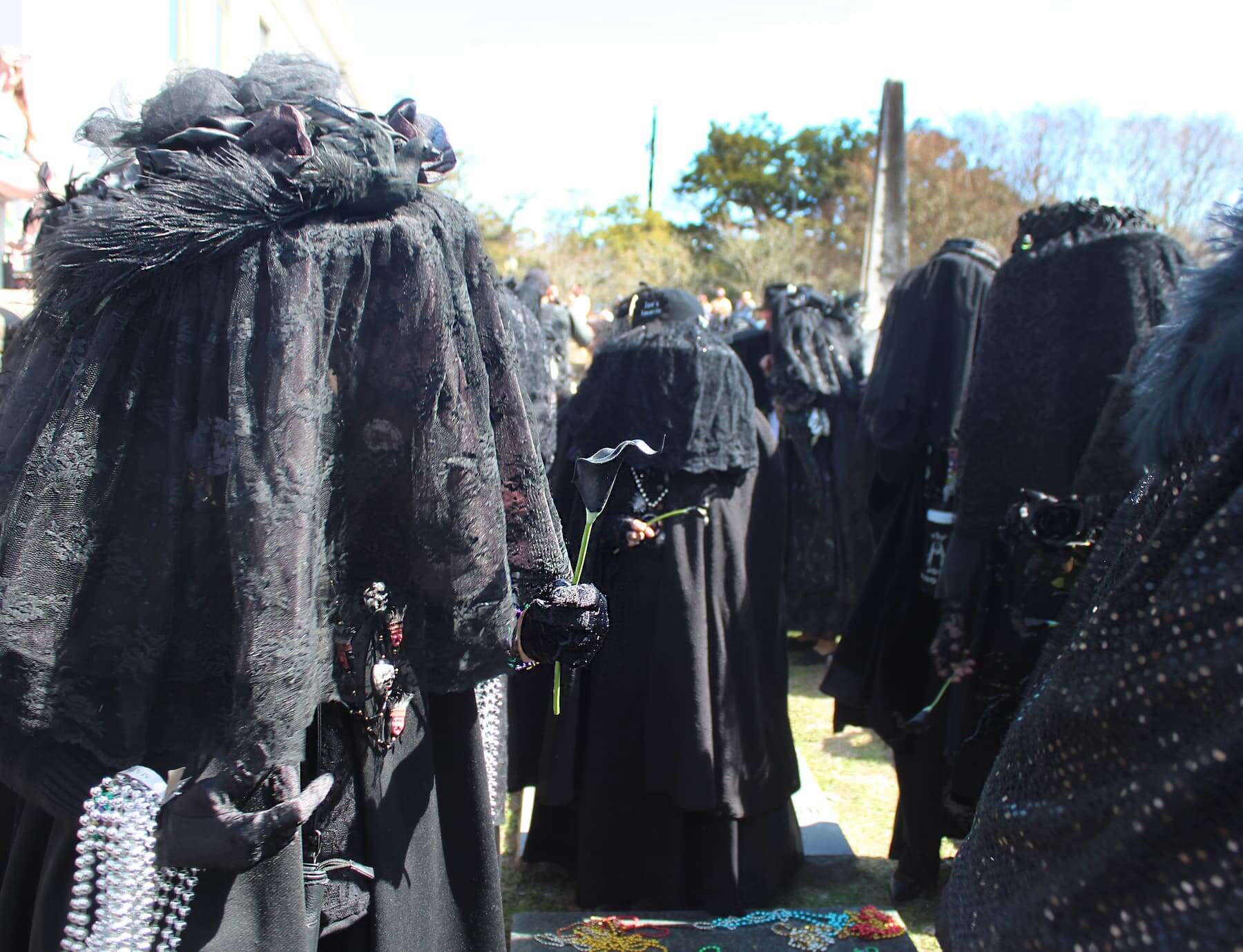
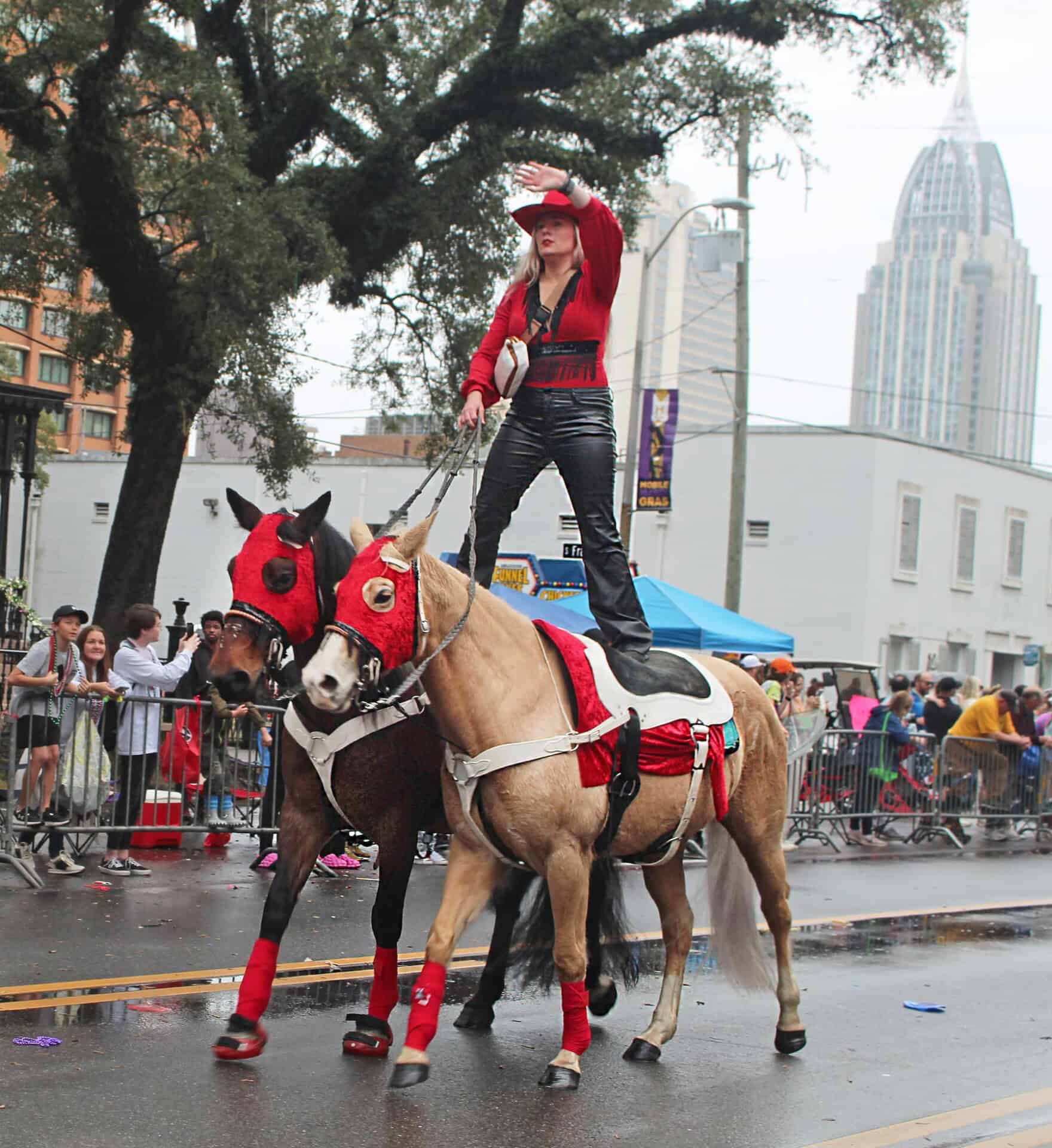
A major highlight is Cain’s Merry Widows, a mysterious, all-black-clad group of women who wail at Cain’s grave, toast him at his house, and ride in the parade. Their antics and coveted throws are crowd favorites. In contrast, the Mistresses of Joe Cain, dressed in red, celebrate Joe’s life with flair, claiming he loved them best. The two groups often stage mock catfights before the parade.
The day also includes the Joe Cain Classic 5K, a motorcade by MAMGA’s King Elexis I, and the Le Krewe de Bienville parade. For many in Mobile, Joe Cain Day is the most beloved celebration of Carnival, full of family-friendly revelry, humor, and tradition.

The Man, the Myth, the Mardi Gras Legend
Joe Cain’s story is a blend of historical fact and enduring legend — much like George Washington and his cherry tree. Though widely credited with reviving Mardi Gras in Mobile, Alabama, Cain’s tale is riddled with inaccuracies and embellishments that have taken on a life of their own.
Cain is believed to have first paraded through Mobile in 1866 dressed as a fictional Chickasaw chief, “Slacabamorinico.” However, records show he was actually in New Orleans that year for a firemen’s parade. The first verified appearance of Joe Cain and his group, the Lost Cause Minstrels, occurred on Mardi Gras Day in 1868, just hours before the first Order of Myths parade.
Cain himself attempted to clarify his role in a short newspaper article, but even that piece, written decades later, includes errors in dates, names and details — likely due to fading memory or typesetting mistakes.
Despite the shaky facts, Mobile embraced Cain as the father of modern Mardi Gras, largely thanks to later storytellers like Julian Lee “Judy” Rayford. Cain’s portrayal as a rebellious Confederate spirit thumbing his nose at Union occupiers is more myth than truth — but it shaped the creation of Joe Cain Day, one of Mobile’s most beloved Carnival celebrations.
In truth, Cain’s legacy isn’t based on perfect accuracy but on the cultural and communal spirit he inspired. While the actual first ride was in 1868, not 1866, and he never called himself “Chief Slac,” the legend endures — and continues to bring joy, identity and unity to the people of Mobile.