The Original Mardi Gras
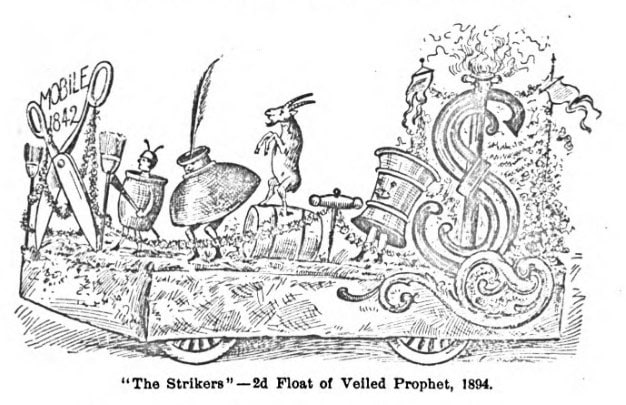
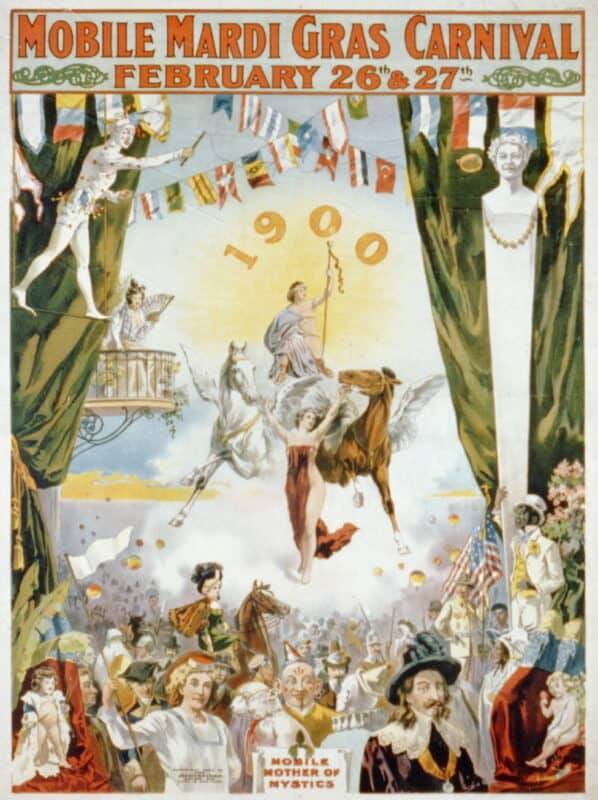
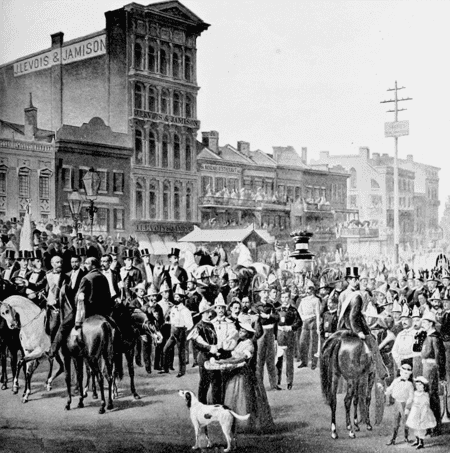
In 1703, Mobile was the capital of French Louisiana, and settlers celebrated the first Mardi Gras in what would become the United States. A few years later, in 1711, the city formed the Boeuf Gras Society, the first mystic society in the country. Later, in 1830, Michael Krafft organized the Cowbellion de Rakin Society, the first formal mystic society parade with floats and costumes.
Mardi Gras survived and evolved through the centuries, although it did go quiet after the Civil War. In 1866, Joe Cain famously dressed as a fictional Chickasaw chief named Slacabamorinico and paraded through Mobile’s streets — kick-starting the modern celebration.
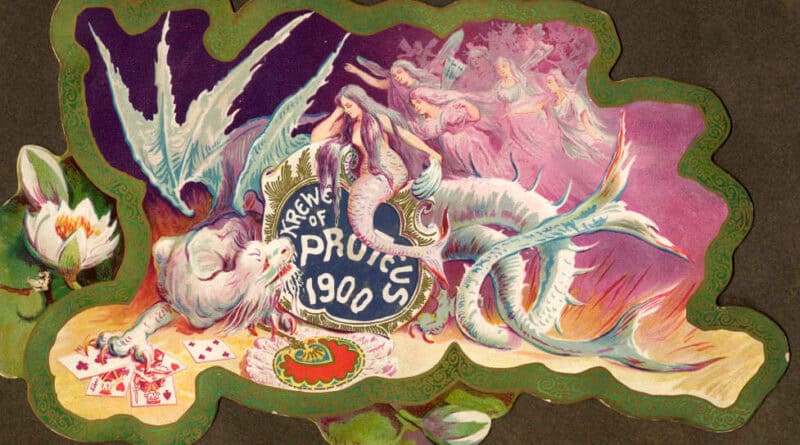
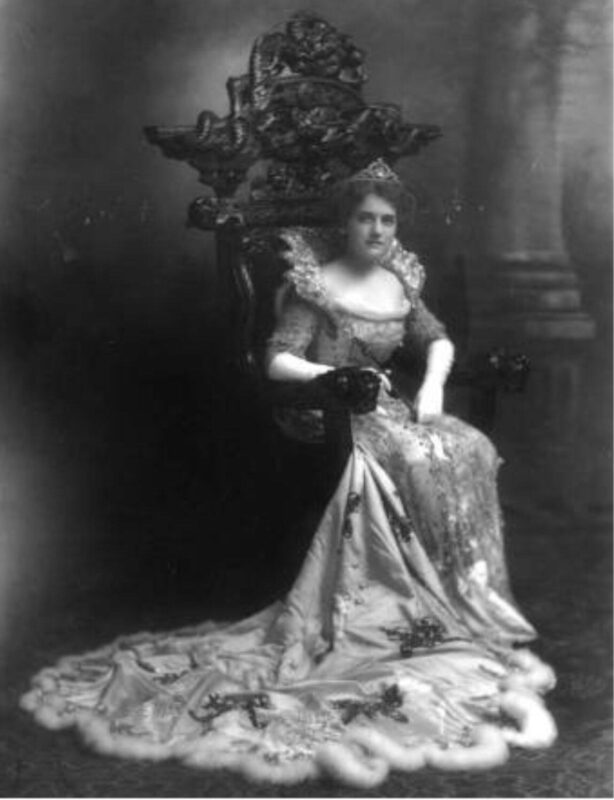
Today, mystic societies (or secretive social clubs sometimes called krewes) live on. Many plan parades and extravagant, formal balls with “kings,” “queens,” and “courts.” Some organizations are centuries old, while new ones form regularly. Dozens of parades roll during the Carnival season, featuring themed floats, marching bands, dancers, and float riders tossing “throws” like beads and MoonPies to the crowds.